
Hôtel de Coulanges
Reinventing the past
FRANCE - Paris
AIM Hanemian Architects responded to a competitive tender from the City of Paris for Innovative Urban Projects to ‘Reinvent Paris’. The Agency proposed to renovate and give new life to the Hotel de Coulanges in the Marais district.
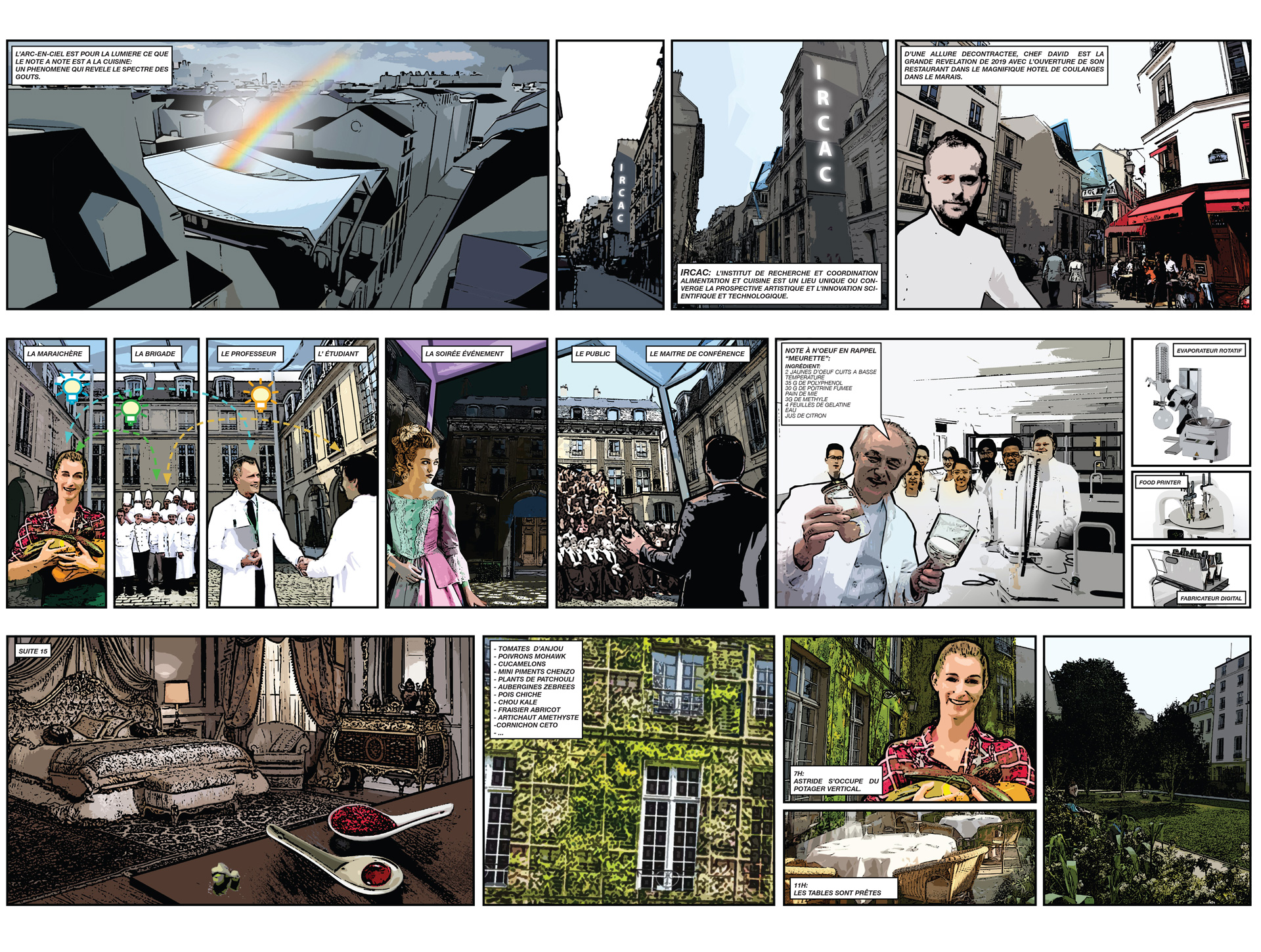
The project team consisted of REA historians Pascal Simonetti and Valérie Noelle Jouffre teaming up with specialist in the lifestyle of earlier times Fabrice Ouziel, INRA scientist and father of the “Note-by-Note” style of cuisine Hervé This, Michelin-starred chef David Toutain, and Anthony Mulsant, a specialist in events organizing and Associate President of Master Image Programmes and of Saint-Gobain with its Domolab Research Centre. The AIM Hanemian Architects project was for an avant-garde and hopefully serendipitous type of place, where the future could be tried out in a research atmosphere at the interface between hotel-keeping and restauration.
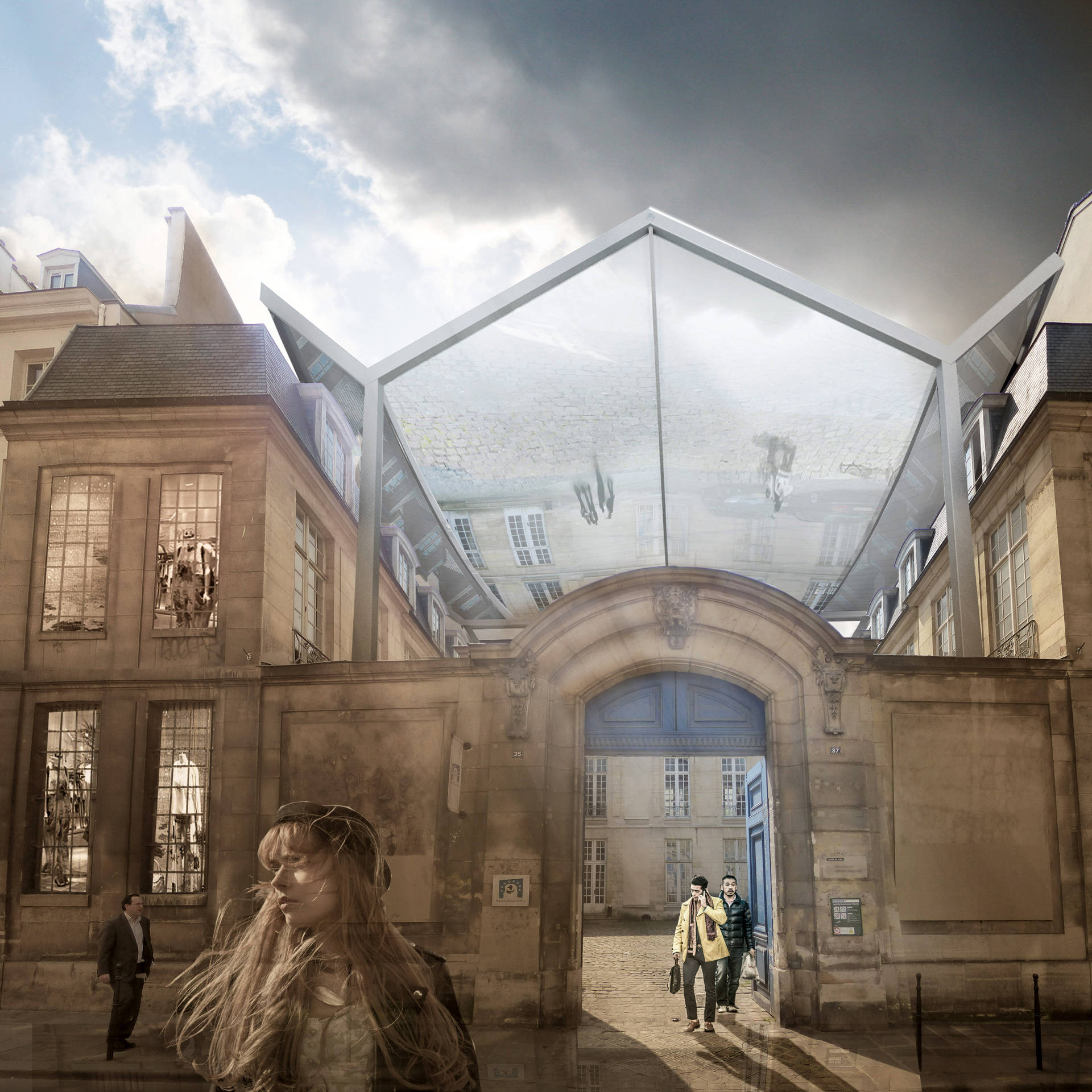
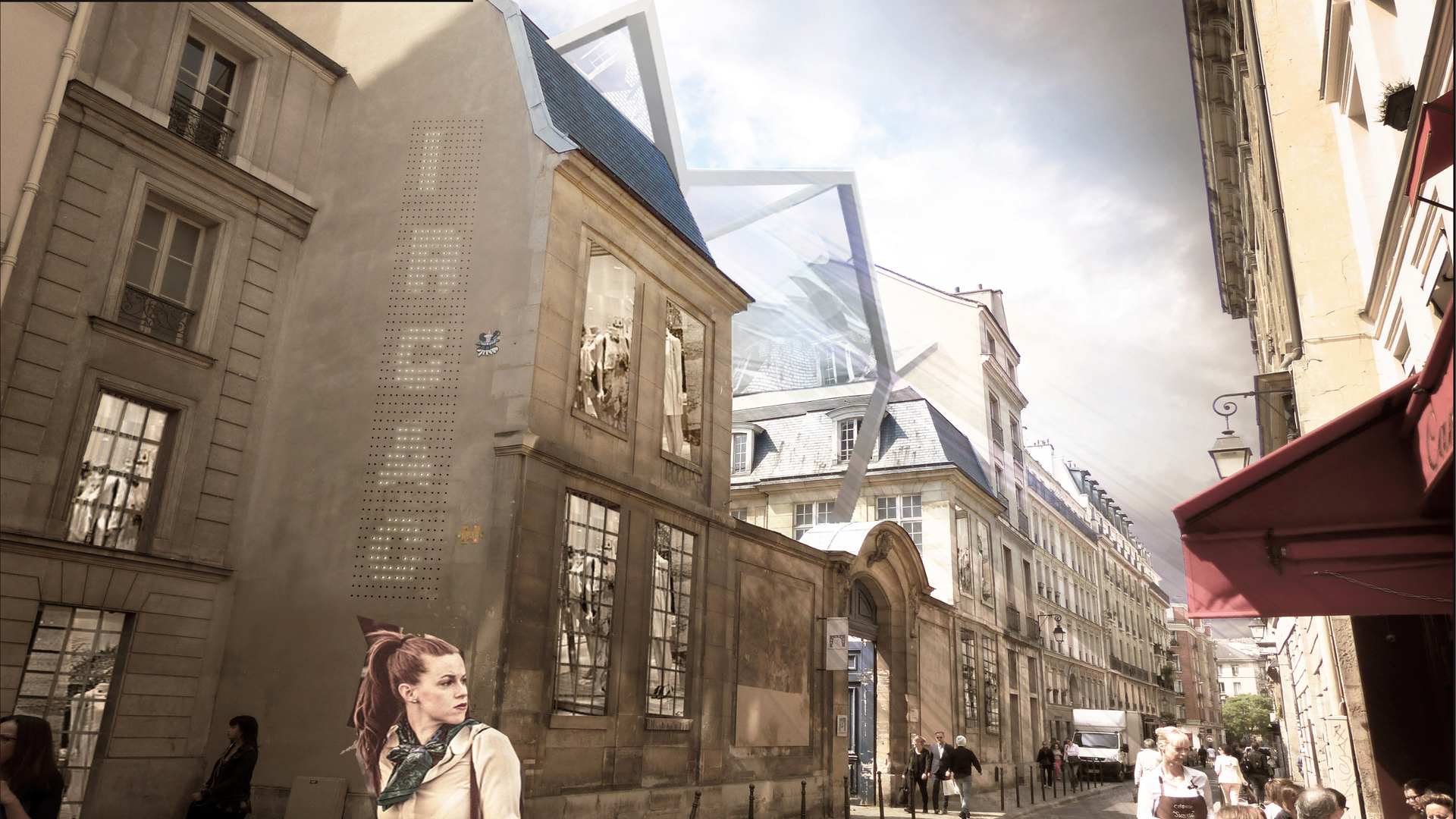
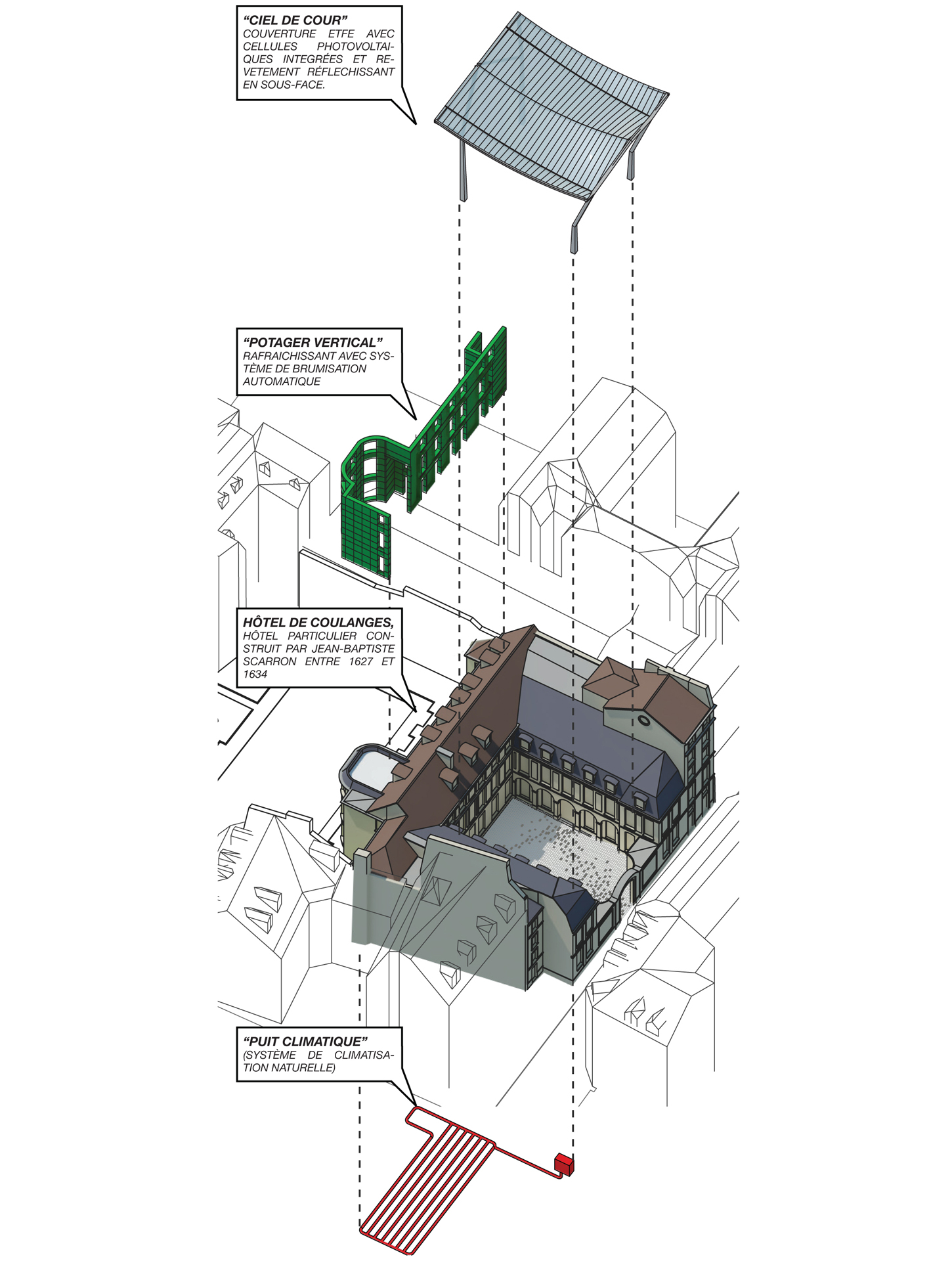
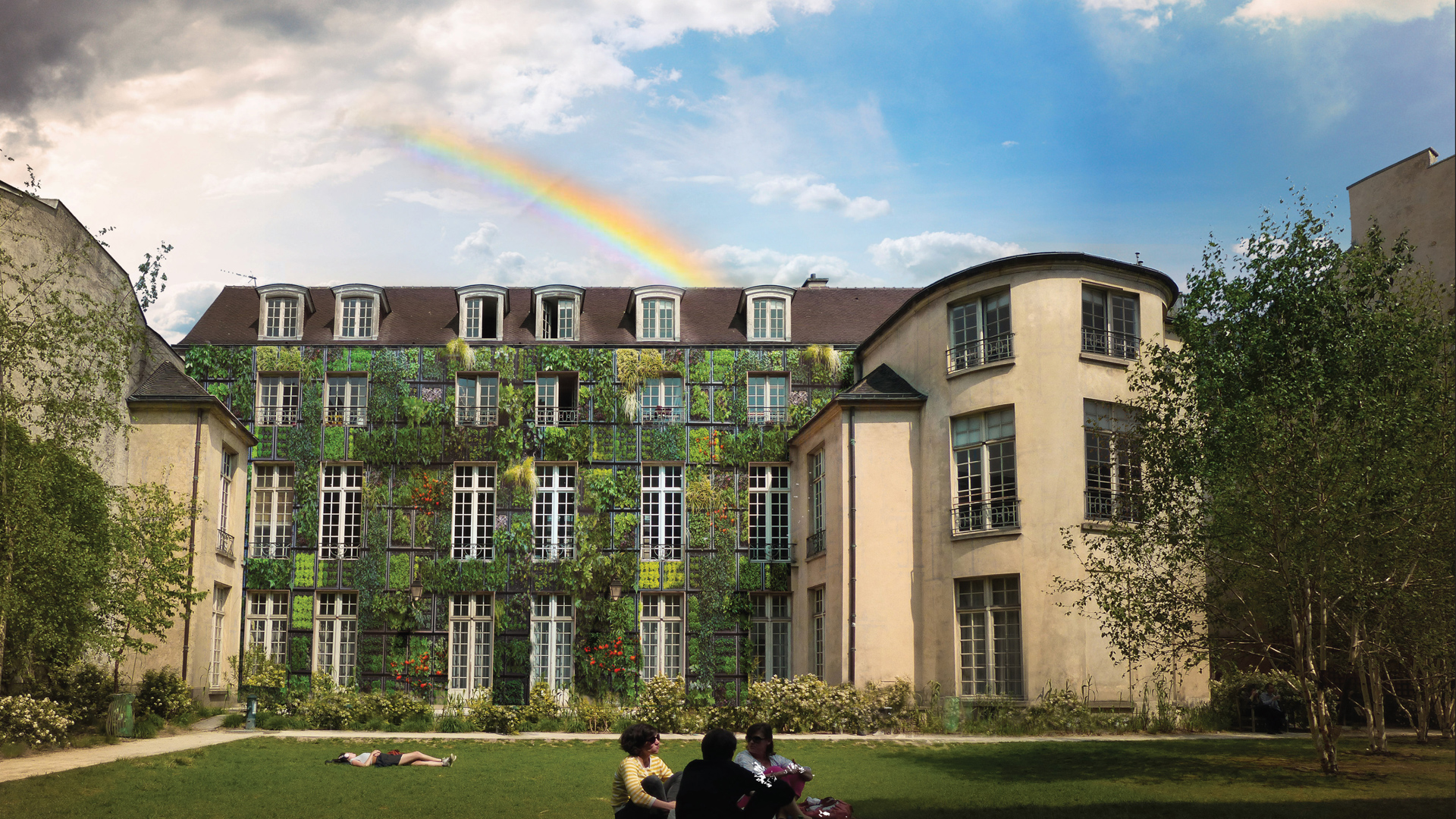
The architectural side of the project rises to the occasion. From a long way off passers-by in the street are surprised by a rainbow hovering above the building generated by a sheet of water and created either by the sun or by a lighting system. This is how you first become aware of the project in the rue des Francs-Bourgeois. On getting closer your second surprise is to see a “courtyard in the sky”, i.e. the building being reflected upside down on ETFE sheets. This space is both open to all and sheltered, designed to be a hub for extraordinary events. The paving of the court is lighted to resemble a star-clustered sky above guiding visitors to the entrances.
The work of IRCAC, the new research centre of INRA for the “Note-by-Note” concept is illustrated on the walls by illuminated calligraphy. In the garden the front elevation of the building has a vertical vegetable garden growing up it, complete with a noria watering system. There will be plenty of ‘material’ here for the Chef and the researchers. Within the hotel guests can sleep in a range of themed suites from a 17th century décor to a space station with hamacs.
This is a magic and exceptional place to raise your consciousness as never before.
Hôtel de Coulanges
Réinventer le passé
FRANCE - Paris
À l’occasion de l’Appel à Projets Urbains Innovants « Réinventer Paris » mené par la Mairie de Paris, AIM Hanemian Architectes a proposé de redonner vie à l’Hôtel de Coulanges situé dans le quartier du Marais à Paris.
Entouré des historiens REA Pascal Simonetti et Valérie-Noëlle Jouffre, rejoints par Fabrice Ouziel, spécialiste des modes de vie anciens, d’Hervé This, père de la cuisine « Note à Note », chercheur à l’INRA, du chef étoilé David Toutain, d’Anthony Mulsant, spécialiste de l’événementiel et Président associé chez Master Image Programmes, de Saint-Gobain avec son centre de recherche Domolab, AIM Hanemian Architectes a proposé d’installer un lieu de sérendipité où divers types de nourriture seraient proposés pour présager le futur, et où un centre de recherche et un nouveau modèle d’hôtellerie s’associeraient pour un travail de symbiose.
L’expression architecturale va de pair avec cette idée. Surprenant les passants de loin, un arc-en- ciel créé au-dessus du bâtiment sur un voile d’eau vaporisé au-delà des toits, soit par le soleil, soit par un éclairage adapté, signale cette présence dans la rue des Francs-Bourgeois. En s’approchant, les visiteurs sont encore étonnés de trouver un « ciel de cour » en toiles ETFE reflétant le bâtiment à l’envers. Ouvert à tous, mais à l’abri, cet espace a été imaginé tel un hub pour des événements extraordinaires. Comme un ciel étoilé, des pavés de lumière au sol marquent les pas et accompagnent vers les entrées.
L’activité inédite de l’IRCAC, le nouveau centre de recherche de l’INRA pour le concept « Note à Note », est amplement annoncé par des calligraphies lumineuses qui marquent les murs. Côté jardin, sur la façade du bâtiment, un potager vertical est installé avec un système de noria. Le chef et les chercheurs y trouveront « matière » pour leurs travaux. A l’intérieur, dans l’hôtel, les suites proposent chacune une thématique différente allant d’un décor XVIIème à celui d’une station orbitale avec des lits hamacs.
Tout est prévu pour l’éveil dans ce lieu en le rendant magique et exceptionnel.
